Discover Corsica
Wild Landscapes, Clear Waters and Raw Elegance
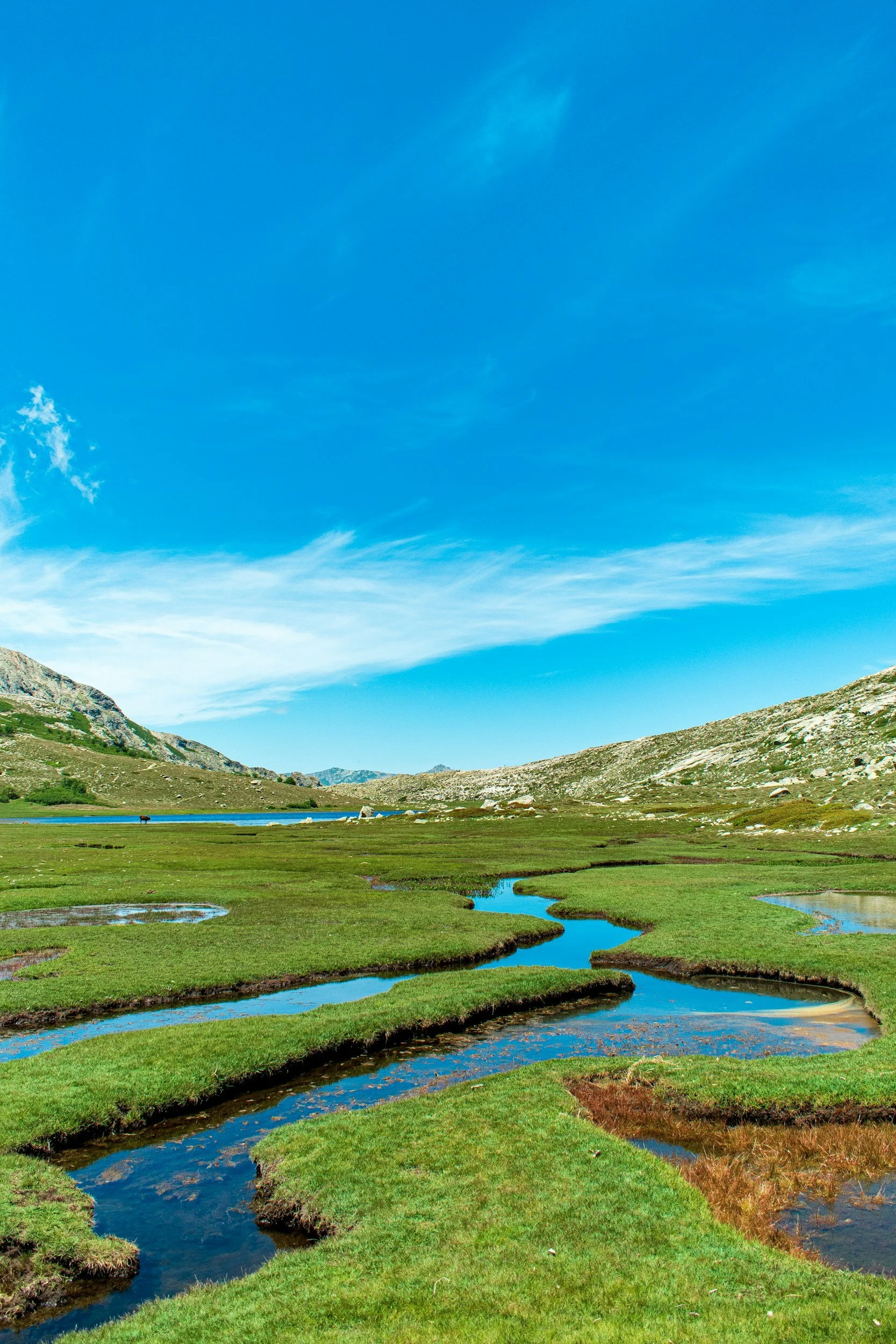
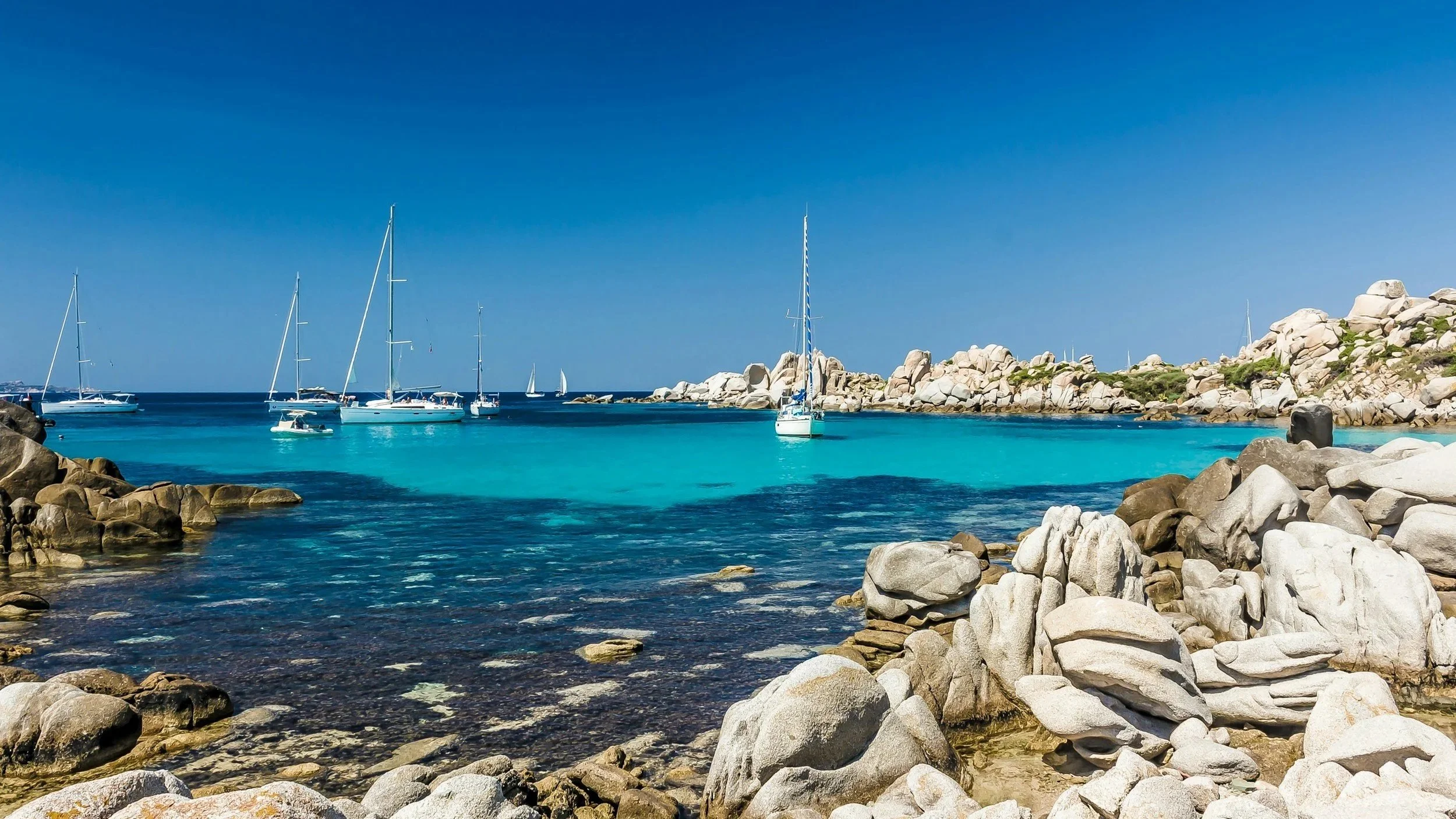
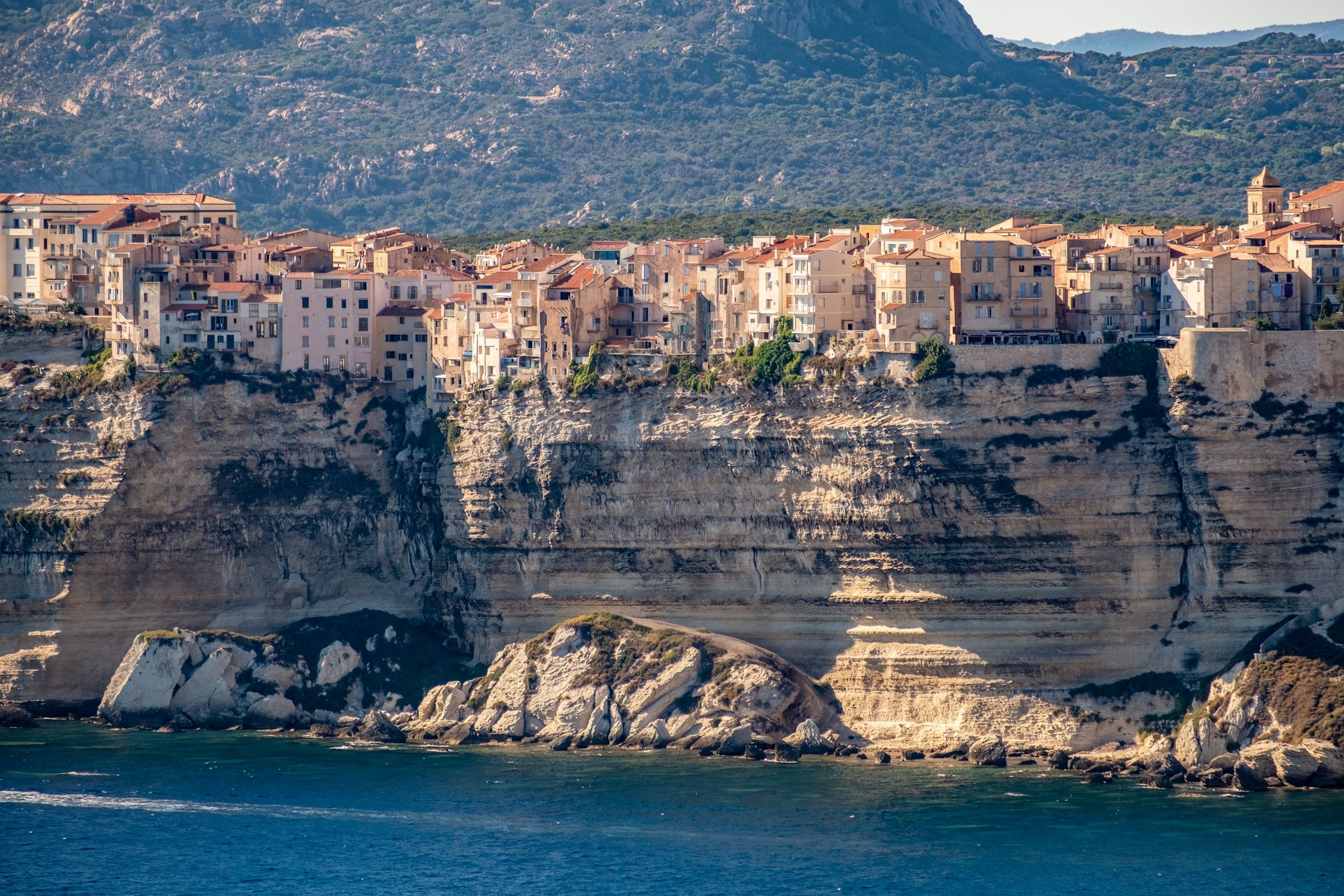
Along the rugged shores of Corsica, where mountains rise directly from the sea and turquoise waters meet untouched coastlines, a more elemental form of beauty emerges. Shaped by nature rather than design, the island offers a striking balance between intensity and stillness, where every landscape feels both powerful and unfiltered.
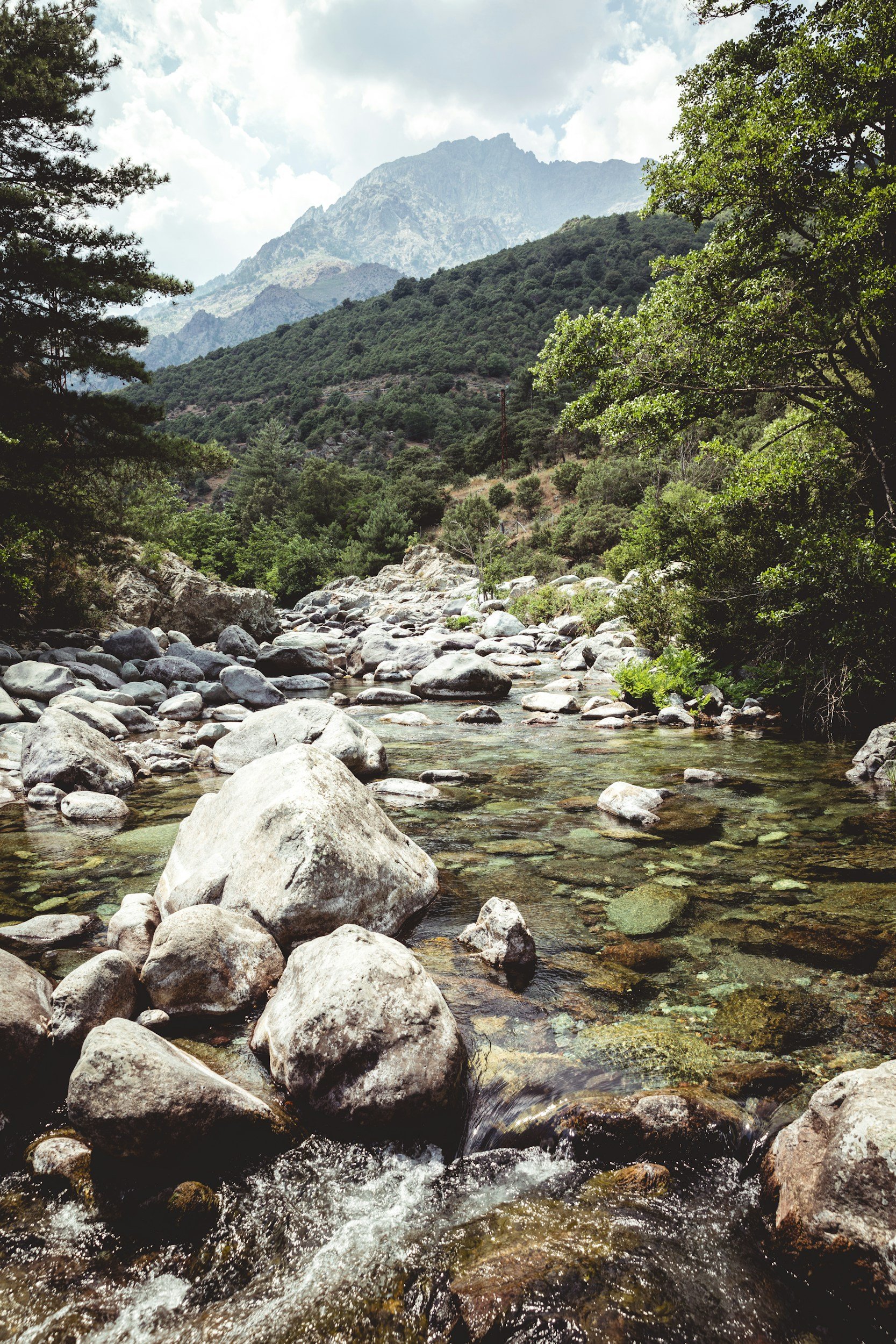
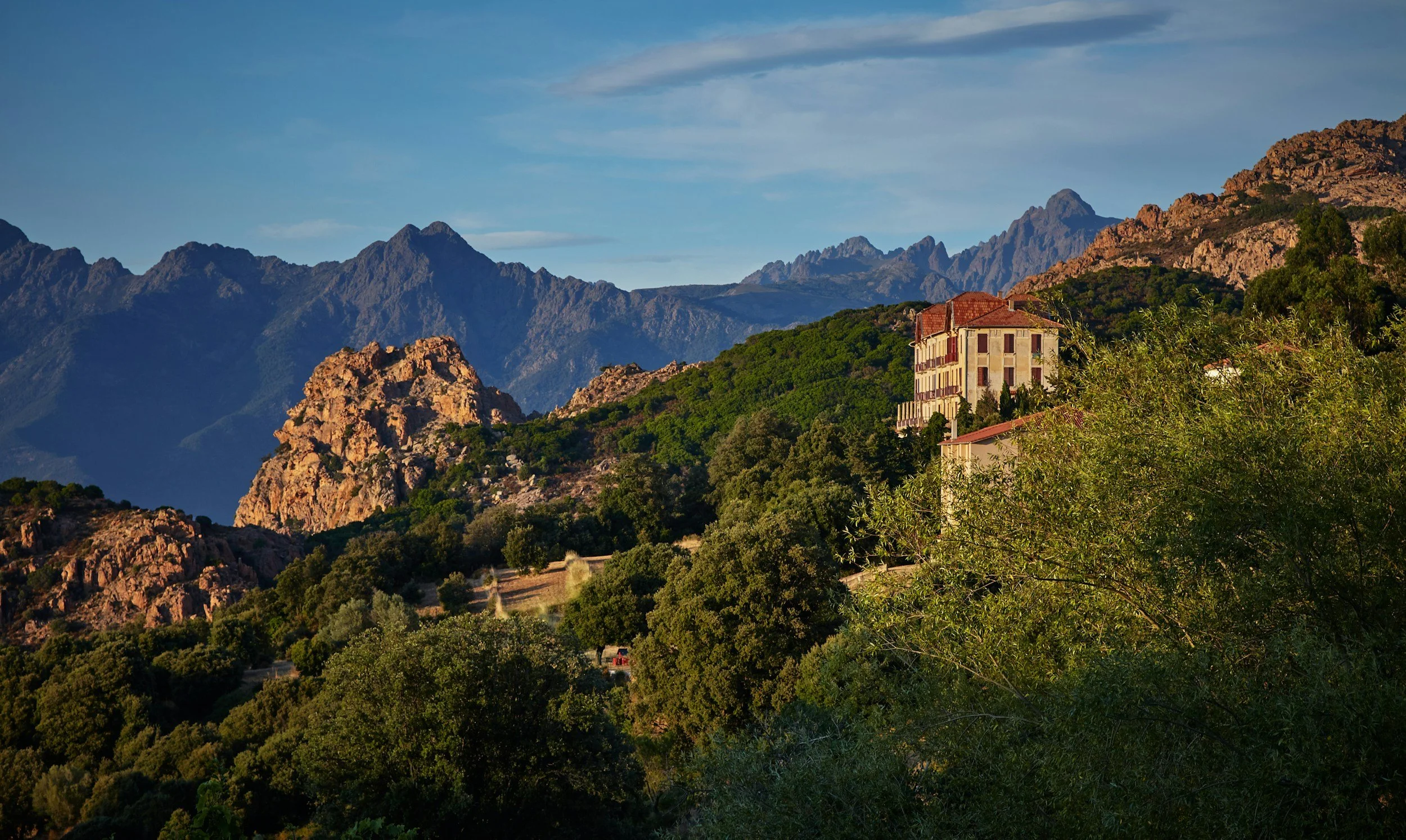
From the dramatic cliffs of Bonifacio to the hidden coves of the south and the mountainous interior of Alta Rocca, Corsica unfolds through contrast — sea and rock, light and shadow, isolation and openness. Each area carries its own identity, yet remains connected by a strong sense of place and independence.
Corsica is not a destination built around structure, but around experience — of long swims in clear water, winding drives through wild terrain, and days that follow the rhythm of nature rather than schedule. Here, luxury is found in space, silence, and authenticity, where the environment defines the experience.
Where Light Meets Luxury
Iconic Sites, Coastal Routes & Essential Landscapes
Corsica is structured around a series of key sites that define its identity and offer clear reference points across the island. From the cliffs of Bonifacio overlooking the sea to the Scandola Nature Reserve, accessible only by boat, and the Calanques de Piana with their distinctive red rock formations, each location reflects a different aspect of the island’s geography.
Further inland, the mountainous terrain reveals another dimension — from the forests and peaks of the Alta Rocca to the GR20, one of Europe’s most demanding hiking routes. Coastal towns such as Porto-Vecchio, Calvi, and Saint-Florent provide access to some of the island’s most well-known beaches, combining natural setting with structured infrastructure.
These landmarks are connected by scenic coastal and mountain roads, making movement across the island an integral part of the experience. Corsica is best approached as a sequence of distinct but complementary stops, where each location contributes to a broader understanding of the island’s landscape and character.
Movement, Access & Flexible Exploration
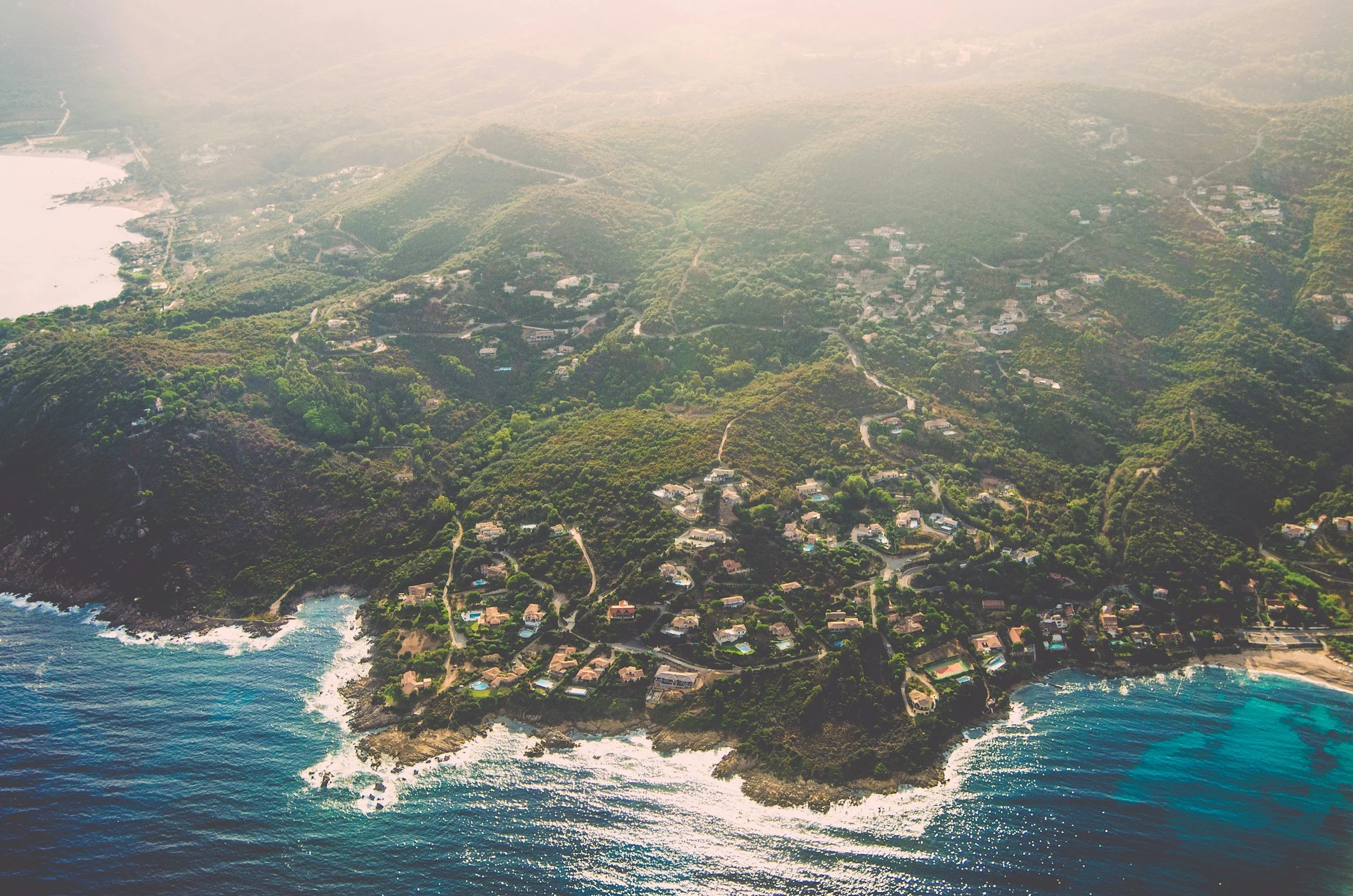
Corsica offers a flexible way of experiencing the destination, whether through movement or staying anchored in one place. While the island is often explored along its coastal and mountain roads, it also lends itself naturally to longer stays, where each location becomes a base rather than a transition.
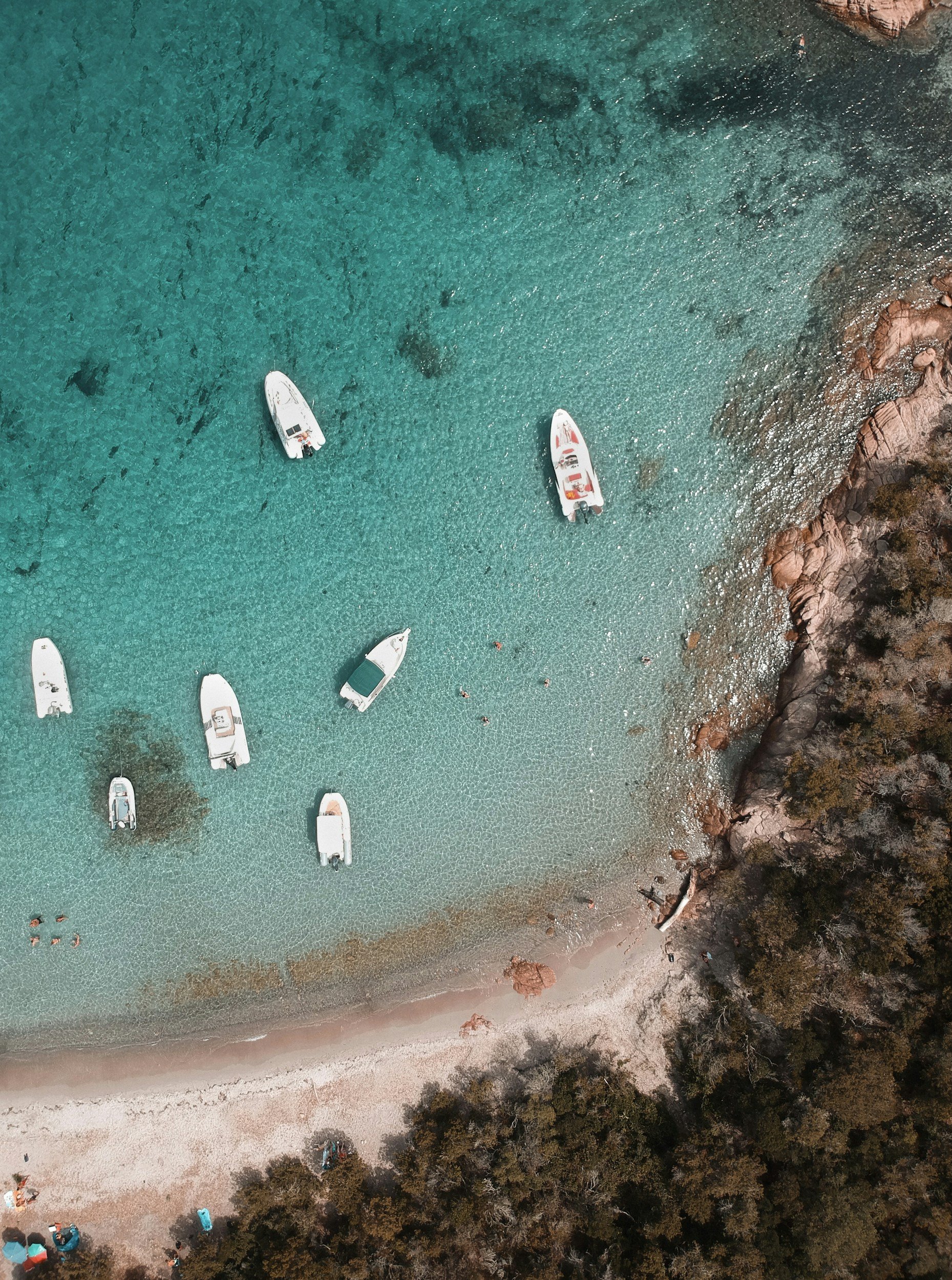
From a single point — a seaside property, a hillside village, or a quiet coastal area — it is possible to access beaches, local towns, and natural sites without the need for constant relocation. Boat excursions and short drives complement this approach, allowing for variety while maintaining a relaxed rhythm.
The island adapts to different travel styles: more dynamic for those who wish to move across regions, or more settled for those seeking stillness, privacy, and immersion. In both cases, the experience remains coherent, shaped by the surrounding landscape rather than by distance covered.
Gastronomy Between Sea and Maquis
From Coastal Tables to Authentic Corsican Flavors
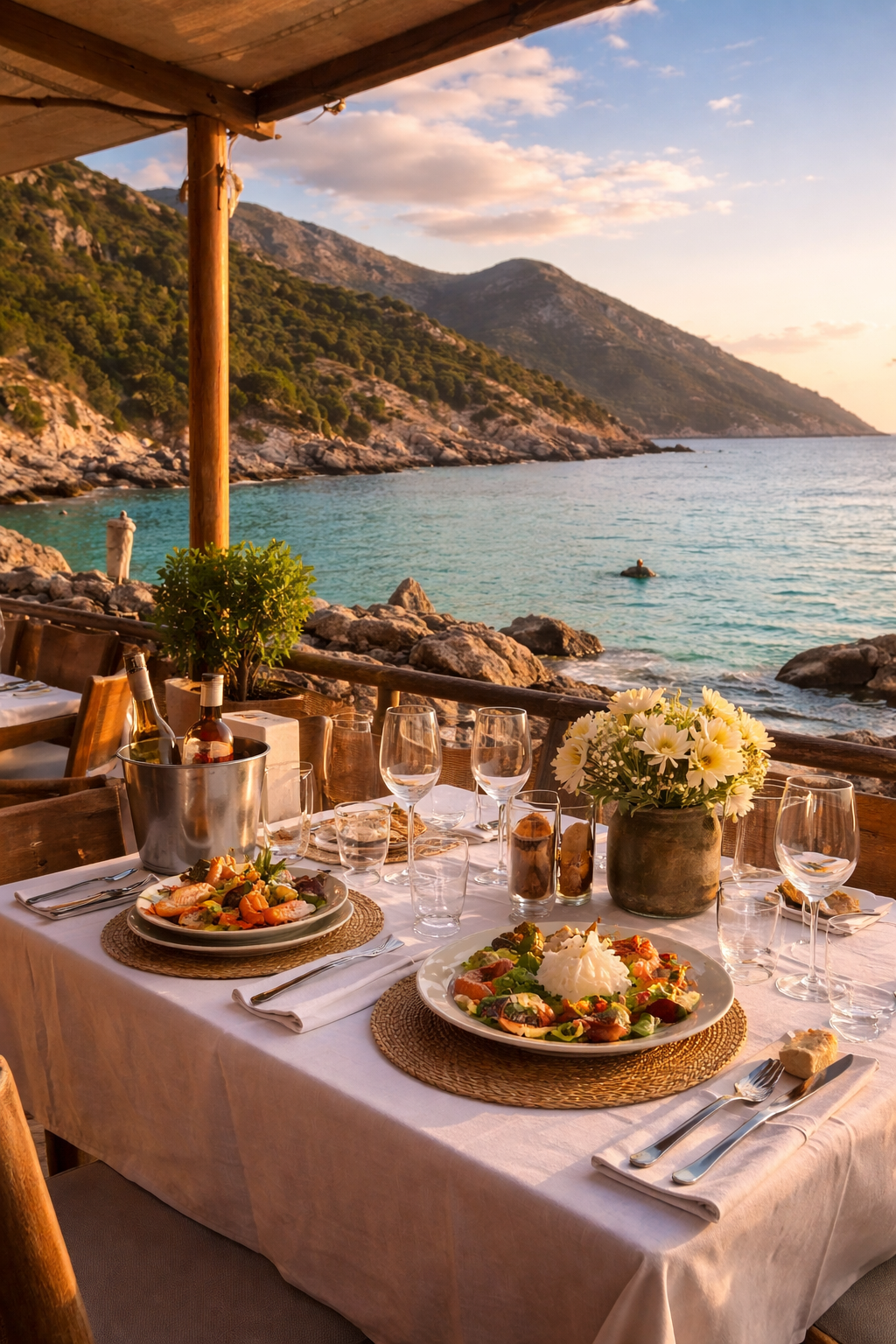
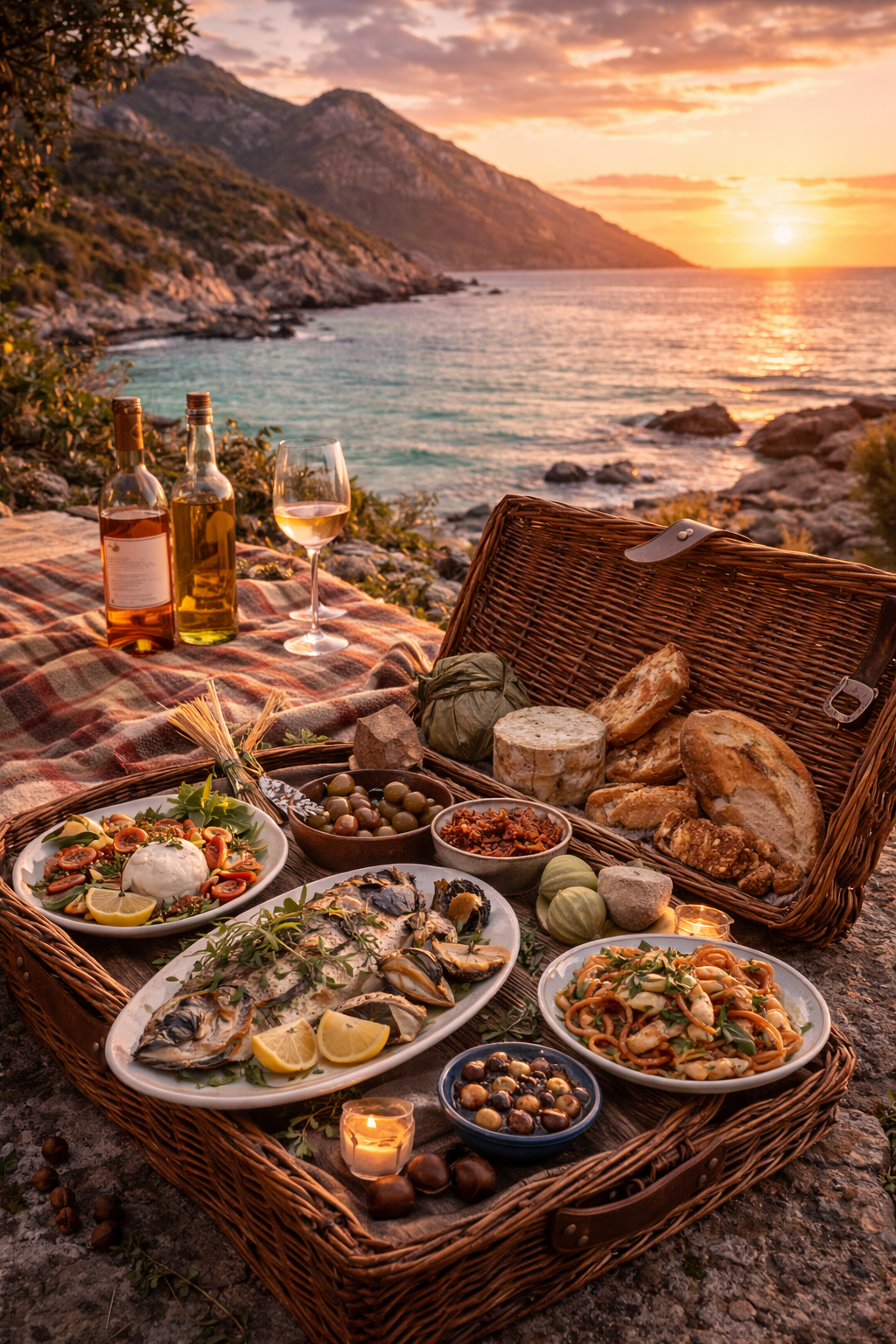
Corsica offers a cuisine shaped by contrast — where the Mediterranean meets mountain traditions, and simplicity meets depth of flavor. The island’s gastronomy is rooted in local products: freshly caught fish, cured meats, wild herbs, chestnut-based specialties, and olive oil, all prepared with a strong sense of identity and place.
Along the coastline, dining takes on a distinct dimension — restaurants overlooking the sea, terraces set above turquoise coves, and tables positioned to follow the light from day to sunset. Inland, more rustic settings reveal another side of Corsican cuisine, grounded in tradition and seasonal ingredients.
Seasons, Climate & Island Rhythm
Corsica can be experienced throughout much of the year, but its character evolves significantly with the seasons. The most popular period extends from May to September, when temperatures are warm, the sea is at its clearest, and coastal life is fully active. June and September offer the best balance — excellent weather with fewer crowds and a more relaxed atmosphere.
Spring (April to June) is one of the most favorable times to visit, with mild temperatures, blooming vegetation, and ideal conditions for both coastal exploration and inland activities. It is particularly suited for hiking, cycling, and discovering villages without peak-season intensity. Summer (July–August) is the busiest period, with high temperatures, strong demand in coastal areas, and a more vibrant, social atmosphere, especially around Bonifacio, Porto-Vecchio, and Calvi.
Autumn (September–October) remains warm, with the sea retaining its temperature and landscapes shifting toward softer tones. It is a strong period for those seeking a quieter experience while still benefiting from favorable conditions. Winter, although calmer and less touristic, offers a different perspective of the island — more local, more introspective, and oriented toward nature and mountain environments.
Overall, Corsica adapts to different travel rhythms — more active and dynamic in summer, more balanced in shoulder seasons, and quieter and more authentic outside peak periods.
When to Visit & What to Know
Corsica is a versatile destination that appeals to a wide range of travelers, from couples and families to active and outdoor-oriented visitors. It is particularly suited to those looking for a combination of beaches, nature, and space, without sacrificing comfort or accessibility.
Families benefit from calm, swimmable waters, varied landscapes, and the possibility to stay in one location while accessing beaches, villages, and activities nearby. Couples will find privacy, scenic settings, and a more discreet, less built-up environment compared to other Mediterranean destinations.
The island is also well adapted to active travelers — hiking, boat excursions, swimming, and exploring coastal and mountainous areas — while remaining accessible to those who prefer a slower pace, with time spent between the sea, accommodation, and local surroundings.
Corsica works both as a dynamic destination for exploration and as a place to settle and disconnect. Its strength lies in this balance: a natural, structured environment that can be adapted to different travel styles without complexity.
Corsica, who is it for?